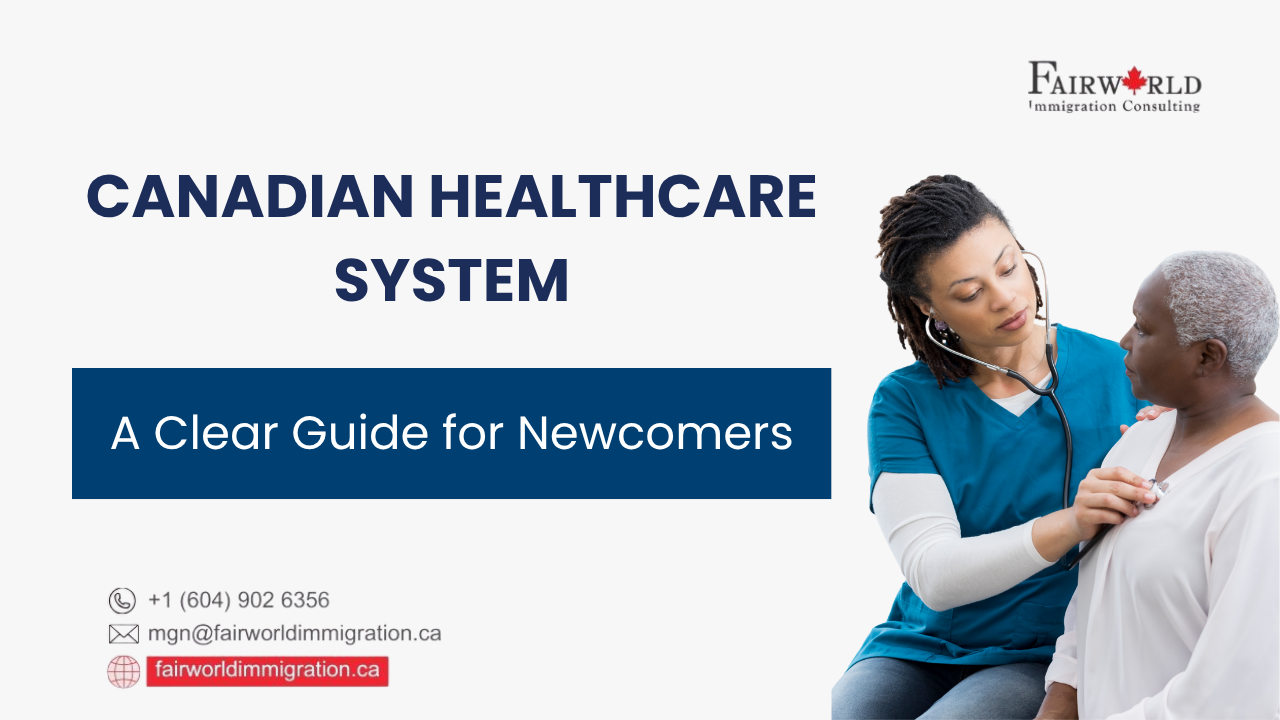
Canadian Healthcare System: A Clear Guide for Newcomers
Published on December 15th 2025 by Fairworld Immigration
The Canadian healthcare system is one of the country’s greatest strengths, providing high-quality, accessible, and mostly free medical care. But for newcomers, the details can be confusing. Who qualifies for public coverage? Do you need private insurance? And how do you apply for a health card?
At Fairworld Immigration Consulting, we work with individuals and families making Canada their new home. This guide explains how the Canadian healthcare system works so you can feel confident and protected from the moment you arrive.
The Basics of Public Healthcare in Canada
Canada’s healthcare is publicly funded but managed by each province and territory. This means coverage and rules vary depending on where you live.
- Citizens and permanent residents receive most essential medical services — doctor visits, hospital stays, emergency care — free at the point of service.
- Each province issues a health card, which you must present whenever you see a doctor or go to a hospital.
- Some provinces impose a waiting period of up to three months before coverage begins, so it’s smart to arrange private insurance as a safety net.
Read more at the Government of Canada’s health care overview.
Permanent Residents and Healthcare
If you’ve recently received permanent residence in Canada, you’ll have almost the same healthcare rights as Canadian citizens.
- Apply for your provincial health card as soon as you land.
- Bring key documents such as your Confirmation of Permanent Residence (COPR) and proof of address.
- Coverage typically includes family doctor appointments, emergency hospital care, surgeries, and diagnostics like X-rays and blood tests.
Tip: Apply early, even if there’s a waiting period. The clock starts ticking once your application is accepted.
Temporary Residents: Students and Workers
If you are in Canada on a study permit or work permit, your access to the Canadian healthcare system depends on the province where you live.
- British Columbia (MSP) and Alberta (AHCIP) offer public coverage to many international students and temporary workers.
- In Ontario and several other provinces, you may need private health insurance during your stay.
- Even if you are eligible for public coverage, you may still face a waiting period, so it’s wise to have private insurance for the first few months.
See eligibility by province at the Government of Canada Health Coverage Guide.
What’s Covered and What’s Not
Public healthcare covers:
- Doctor visits
- Emergency care
- Hospital stays and medically necessary surgeries
What’s not covered:
- Dental care
- Vision care (glasses, eye exams)
- Most prescription drugs (except some provincial plans)
- Many mental health services
For these services, you’ll need private health insurance Canada.
Why Private Health Insurance Canada Is Essential
Private health insurance fills the gaps left by the public system. For newcomers, it’s often a must-have.
Consider private insurance if you are:
- A student or worker in a province that doesn’t cover temporary residents
- Waiting for your public health coverage to begin
- Wanting additional benefits like dental, prescriptions, or vision
When comparing insurance plans, check:
- Coverage limits
- Deductibles and out-of-pocket costs
- Emergency care options
- Add-ons for dental or mental health
You can learn more about private coverage from the Canadian Life and Health Insurance Association.
How to Apply for a Health Card
Here’s a step-by-step process:
- Gather documents (COPR, passport, proof of residence).
- Visit your province’s health ministry website (e.g., Ontario Health, BC MSP).
- Submit the application online or in person.
- Once approved, you’ll receive your health card by mail.
Always carry your card when visiting doctors, clinics, or hospitals.
Bonus Tips for Newcomers
- Carry your health card (or private insurance card) at all times.
- Double-check coverage rules before moving provinces — you may need to reapply in your new province.
- If you’re an international student, confirm whether your school provides a group health plan.
- Never assume everything is free, ask what’s covered before accepting treatment.
Final Word
The Canadian healthcare system is one of the best in the world, but it’s important to understand how it works before you arrive. Public coverage depends on your immigration status and province of residence, while private insurance ensures you’re protected for services not included.
At Fairworld Immigration Consulting, we help newcomers navigate every part of the settlement journey, from visas and work permits to healthcare and housing guidance.
Have questions about immigration or healthcare coverage? Contact us at Fairworld Immigration Consulting and let our experts guide you every step of the way.